
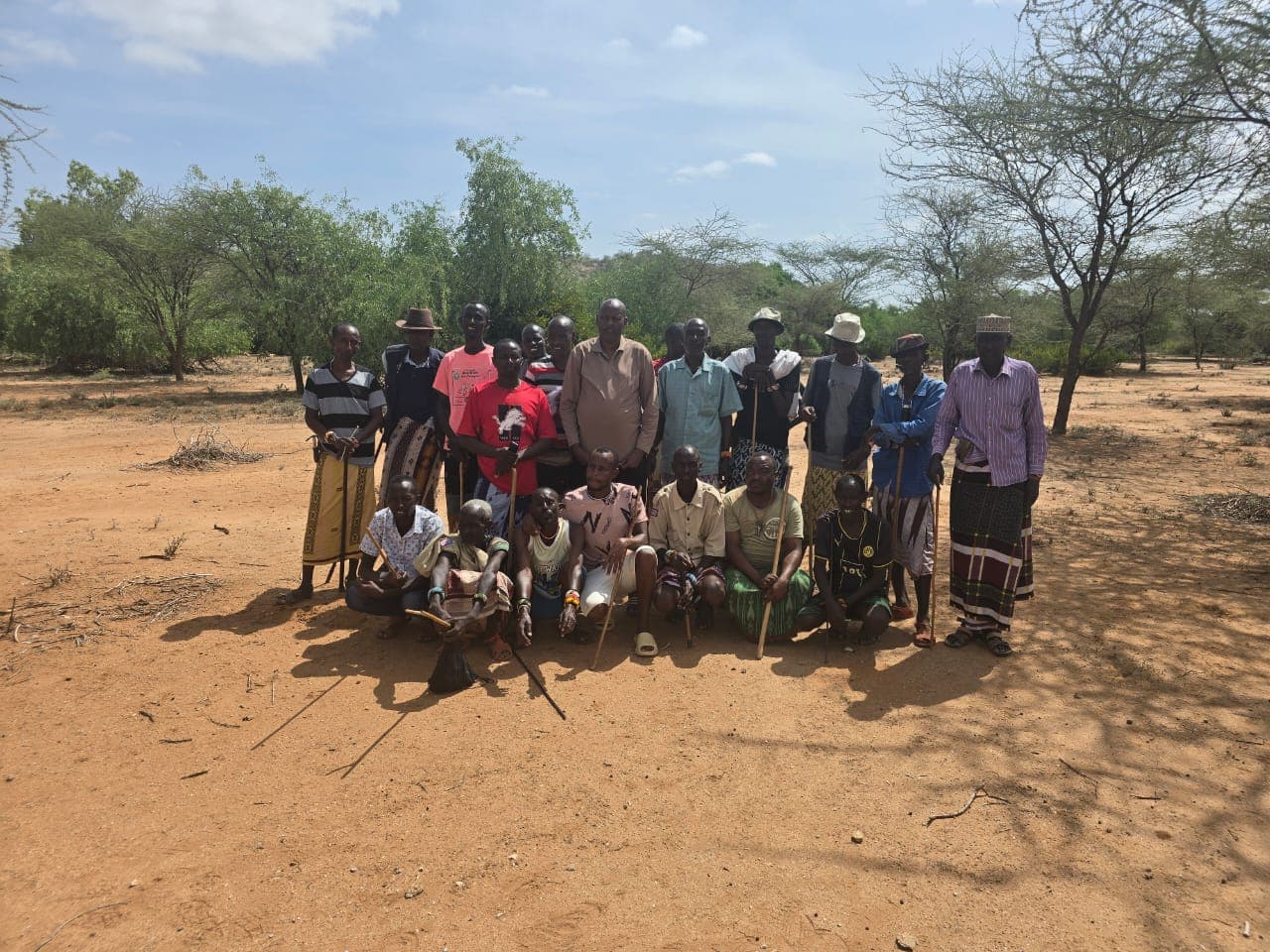
Mitigating Polycrisis Among Samburu Morans in Laisamis/Merile Ward
We are advancing a community-based response to cattle rustling, highway robbery, and climate stress by supporting 51 Morans with livelihoods, financial skills, climate adaptation knowledge, and peacebuilding training.
This concept note responds to a polycrisis affecting Morans in Samburu and Marsabit Counties, especially in Laisamis/Merile Ward. Insecurity linked to cattle rustling and highway robbery is intersecting with drought, resource scarcity, and economic marginalization.
Our approach is to work with 51 Morans, organised into 17 groups of three, and help them move toward practical alternative livelihoods. The project combines sheep and goat trading and rearing, financial literacy, peacebuilding, climate adaptation, group savings, and market linkage support.
The project is distributed across four locations in Laisamis/Merile Ward: Merile with 18 participants, Laisamis with 21, Lontolio with 6, and Nairobi with 6. Participants are selected with elders and local authorities to strengthen fairness and community ownership.
Each group receives seed capital to begin livestock-based activity, alongside financial literacy, climate adaptation training, peacebuilding support, and a monthly group savings discipline meant to build a revolving fund over time.
We see this as both a peacebuilding and economic resilience intervention. By expanding legitimate income options and strengthening local cooperation, we aim to reduce reliance on harmful survival strategies while improving community trust, mobility, and resilience.
We share these updates so partners, county actors, community organisations, and the public can better understand the purpose and context of our work.
Target participants
51 Morans in 17 groups of three
Locations
Merile, Laisamis, Lontolio, and Nairobi
Seed capital
Kshs. 20,000 per group
Project budget
Kshs. 1,400,000 total
Monthly savings
Kshs. 1,000 per group
Livelihood focus
Sheep and goat trading and rearing